
Carbon Filter Systems — How They Work
Understanding Catalytic Carbon
Whole-House Filtration
Chlorine, chemicals, and odors come standard with most South Florida tap water. Here’s a plain-language explanation of what a catalytic carbon filter is, what’s inside it, and what it actually does to your water.
The Basics
What Is a Catalytic Carbon Filter?
A whole-house catalytic carbon filter is a large tank installed on your main water line that removes chlorine, chloramines, chemical byproducts, and odors from every drop of water entering your home — before it ever reaches a tap, shower, or appliance.
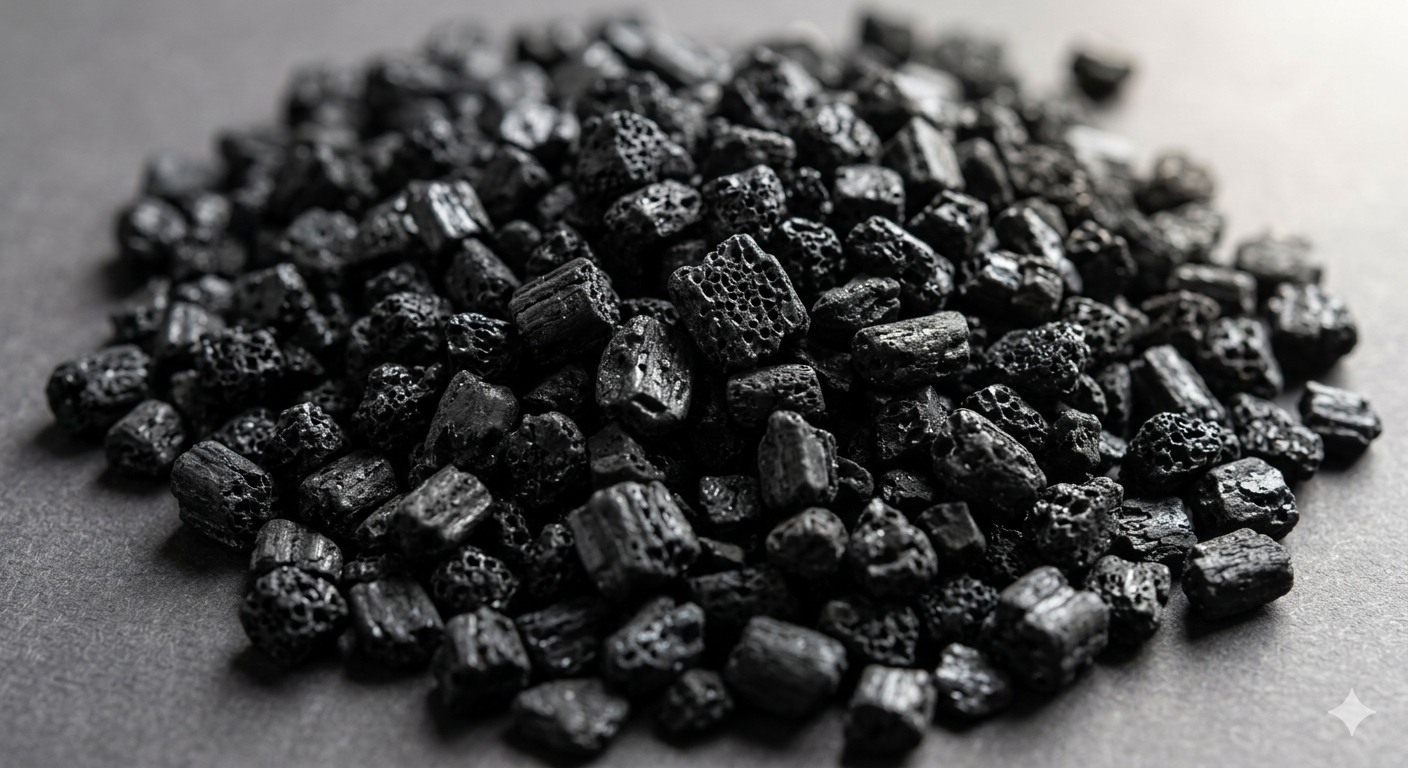
“Catalytic carbon” refers to a specially treated form of activated carbon that has an enhanced surface structure. That enhanced surface makes it significantly more effective than standard activated carbon — particularly at breaking down chloramines, which are harder to remove and increasingly common in Florida municipal water supplies.
Unlike a water softener (which addresses mineral hardness), a carbon filter works on a completely different set of water quality concerns — primarily taste, odor, and chemical content.
What It Addresses
What a Carbon Filter Removes from Your Water
Hard water itself isn’t a health risk, but over time it causes real problems throughout your home. Understanding these effects helps explain why so many South Florida homeowners make softening their first water treatment step.
Inside the System
What’s Inside a Catalytic Carbon Filter
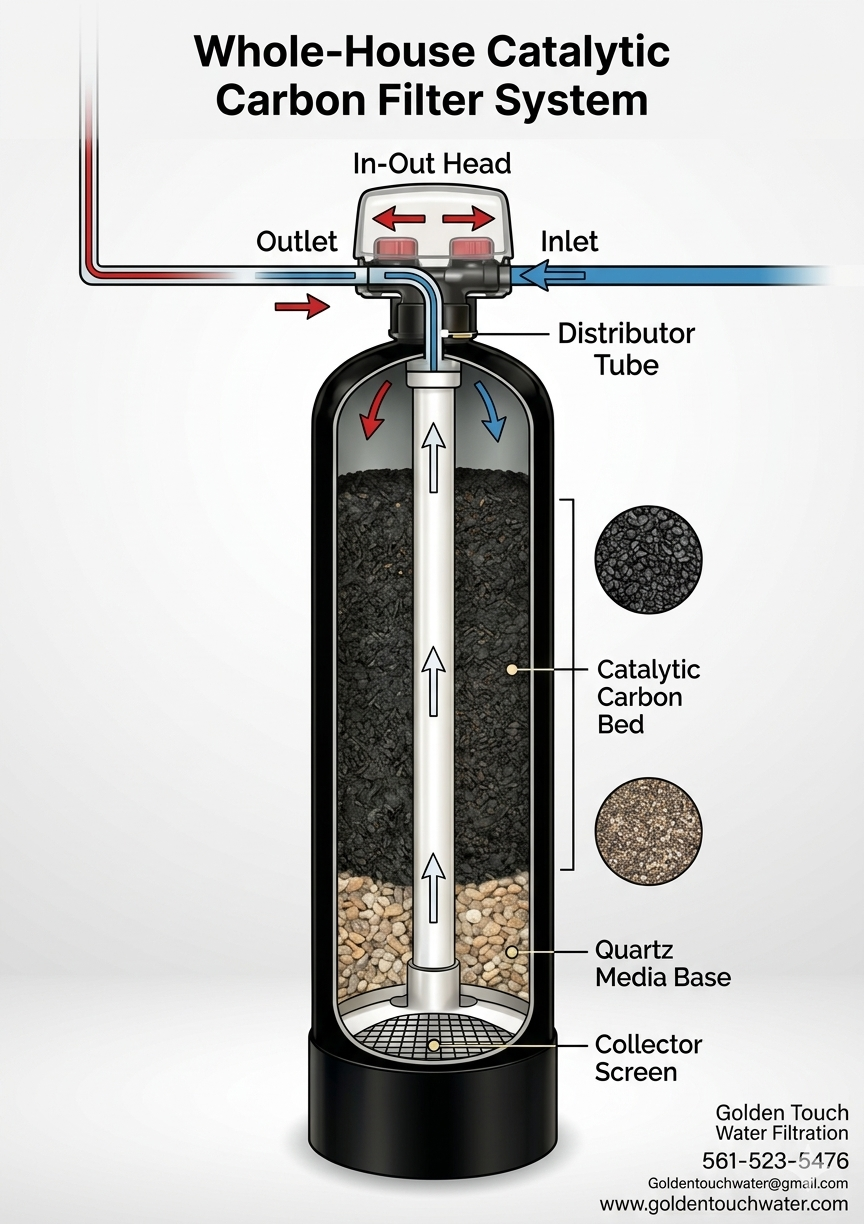
This diagram shows the actual components of the whole-house catalytic carbon system we install. Each layer and part has a specific function in delivering clean, chemical-free water throughout your home.
The Process
How a Catalytic Carbon Filter Works —
Step by Step
Not all carbon is the same. Here’s a straightforward comparison of what makes catalytic carbon the better choice for Florida water conditions.
Unfiltered Water Enters the Tank
Your home’s main water line connects directly to the filter. Water enters through the inlet on the control head and is directed downward through the distributor tube to the bottom of the tank — below the media layers.
Water Rises Through the Media Layers
From the bottom, water flows upward — first through the quartz base layer, then through the full depth of the catalytic carbon bed. This upward flow through the carbon is where filtration happens. As water contacts the carbon surface, chlorine, chloramines, chemicals, and odor compounds bond to the carbon through a process called adsorption and are removed from the water.
Filtered Water Exits to Your Home
Clean water exits through the outlet at the top of the control head and flows into your home’s plumbing. Because this system is installed on the main line, every fixture in the house — showers, sinks, ice makers, washing machines — receives filtered water.
Media Replacement Over Time
Catalytic carbon has a finite lifespan — the adsorption sites on the carbon surface eventually become saturated. Depending on water quality and usage, the media typically needs to be replaced every 1 – 2 years. This is a straightforward service call — no major work required.
Why It Matters
Catalytic Carbon vs. Standard
Activated Carbon
Not all carbon is the same. Here’s a straightforward comparison of what makes catalytic
carbon the better choice for Florida water conditions.
Good to Know
Common Questions
No. A carbon filter removes chemicals, chlorine, and odors — it does not address water hardness (calcium and magnesium). These are two separate water quality concerns that require different types of treatment. Many households in South Florida benefit from both a softener and a carbon filter, addressing hardness and chemical content together.
Most people notice the difference the same day — particularly in the shower. Water no longer smells of chlorine, and many people find their skin feels less dry. The taste difference in drinking water is also typically immediate and noticeable.
It depends on your water utility. Many South Florida municipalities have switched from free chlorine to chloramines as their primary disinfectant because chloramines are more stable over longer distribution distances. If you notice a persistent chemical smell in your water that doesn’t fully go away even after sitting out, chloramines are likely present. A water test can confirm.
No. A carbon filter requires no salt, no chemicals, and no consumables. The only maintenance is the automatic weekly backwash (which the system handles on its own) and eventual media replacement every several years.
A whole-house carbon filter significantly improves the taste, smell, and chemical profile of your water — but it is not a substitute for a dedicated drinking water system like reverse osmosis, which removes a much broader range of contaminants including dissolved solids, heavy metals, and nitrates. Many households use a whole-house carbon filter in combination with an under-sink reverse osmosis system for their drinking and cooking water.
Whole-house carbon filters are typically installed near the point where water enters your home — often in a garage, utility room, or outside near the water meter. The tank is roughly the size of a large propane tank. Installation requires connection to the main water line and a nearby drain for backwash water.

