
Water Softeners — How They Work
Understanding Water Softeners
Hard water is one of the most common — and most damaging — water problems in South Florida. Here’s a straightforward explanation of what a water softener is, what’s inside it, and how it works.
The Basics
What Is a Water Softener?
A water softener is a whole-home system designed to remove the minerals that make water “hard” — primarily calcium and magnesium. It does this through a natural process called ion exchange, where those hardness minerals are swapped out for a small amount of sodium as water flows through the system.
The result is “soft” water — water that behaves the way water is supposed to, without leaving deposits on your fixtures, appliances, or skin.
In South Florida, municipal and well water tends to be very hard. You may already be seeing the signs: white scale buildup on faucets, spotty dishes, or that dry, tight feeling on your skin after a shower. A water softener addresses all of that at the source.
What Hard Water Does
The Effects of Untreated Hard Water
Hard water itself isn’t a health risk, but over time it causes real problems throughout your home. Understanding these effects helps explain why so many South Florida homeowners make softening their first water treatment step.
Inside the System
What’s Inside a Water Softener
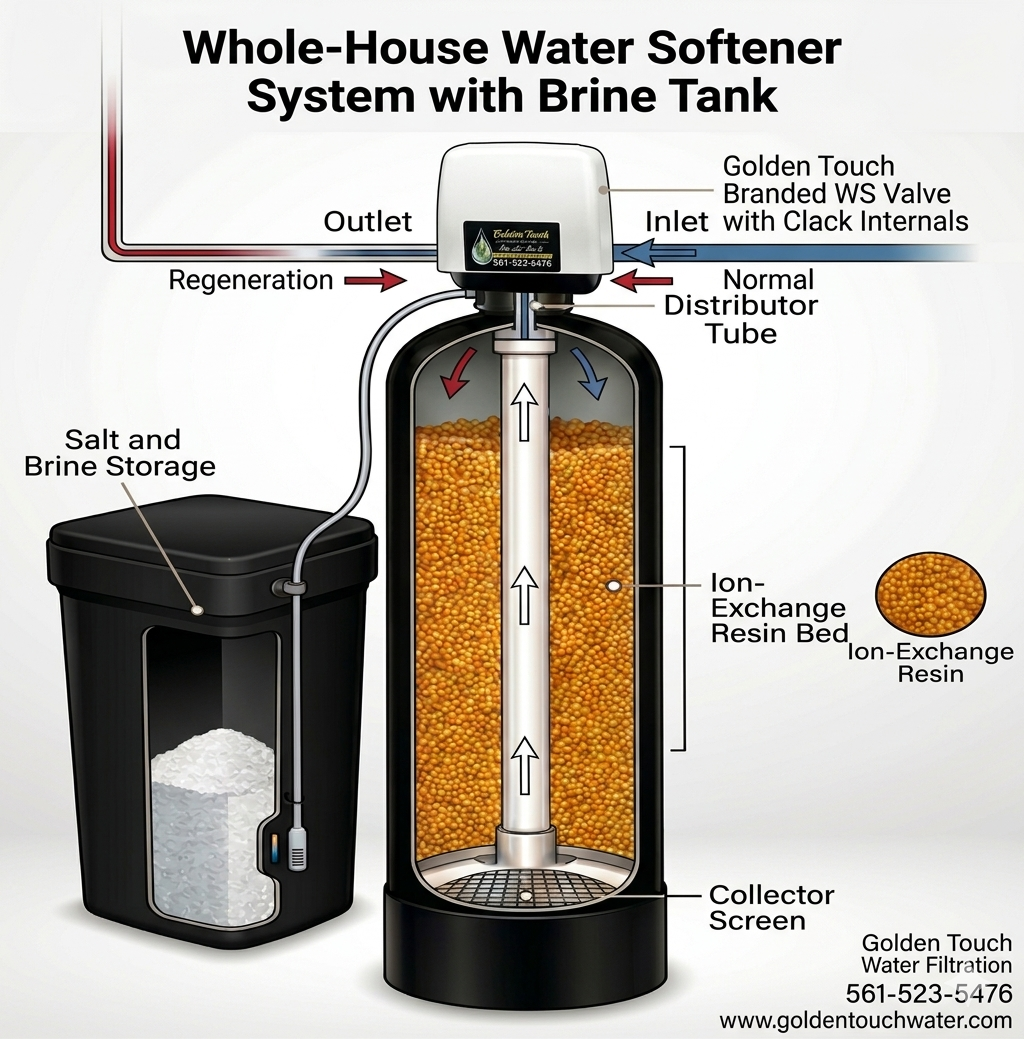
This diagram shows the actual components of the whole-house water softener
system we install. Each part plays a specific role in the softening process.
The Process
How a Water Softener Works — Step by Step
Hard Water Enters the Tank
Your home’s main water supply flows into the mineral tank through the inlet. The distributor tube directs it downward through the full depth of the resin bed, ensuring maximum contact with the ion-exchange media.
Ion Exchange Takes Place
As water moves through the resin bed, calcium and magnesium ions — the minerals that cause hardness — are attracted to the resin beads and swap places with sodium ions. The hardness minerals stay on the beads. The water continues upward, now soft.
Soft Water Reaches Every Tap
Softened water exits through the outlet and distributes through your entire plumbing system — every faucet, shower, appliance, and fixture throughout the home receives treated water simultaneously.
The Resin Regenerates Automatically
The control valve tracks water use and initiates a regeneration cycle when the resin approaches capacity. A saltwater brine solution flushes the accumulated hardness minerals off the beads and out to drain. This process typically runs automatically at a low-use hour — most people never notice it happening.
Ongoing Maintenance Is Minimal
The only routine task required is adding salt to the brine tank — roughly every 3 – 4 months depending on water usage. The system manages everything else on its own.
Good to Know
Common Questions
Yes. The sodium added during ion exchange is very small — typically 20–40 mg per liter depending on your water hardness. For most people this is completely fine. If you are on a strict low-sodium diet, a reverse osmosis drinking water system at the kitchen sink can remove essentially all sodium from your drinking water.
Most people notice that soft water tastes slightly different — some describe it as “smoother.” The mineral taste you may be used to from hard water is largely absent. Many people pair a softener with a reverse osmosis system under the kitchen sink for the best-tasting drinking water.
South Florida water ranges from moderately hard to very hard — typically between 150 and 350+ parts per million (PPM) of dissolved minerals, depending on your city and source. Anything above 120 PPM is generally considered hard enough to benefit from a softener.
No — a water softener is specifically designed to remove hardness minerals (calcium and magnesium). It does not filter chlorine, chemicals, bacteria, or other contaminants. A whole-house carbon filter or a reverse osmosis system addresses those concerns and is often paired with a softener for complete water treatment.
A quality water softener with reliable internals (like the Clack valve we use) typically lasts 15–20 years with minimal maintenance. The resin itself can last the life of the unit if the system is properly sized and maintained.

